There's no getting away from the fact that the Nationally Significant Infrastructure Project (NSIP) process is highly structured, often very technical, and focused on written, evidence. It can be difficult to think creatively when you're presented with pages of information and opinions collected from local residents.
If you want to keep local people involved with NSIP plans, and build relationships with your community, you need to find a way to present raw community feedback in a way that they understand, and developers and planning inspectorate will take notice of.
Presenting the feedback in a creative way might also prompt additional community engagement.
Creative information gathering
Feedback doesn't have to come from a - public meeting - why not go where people will already be?
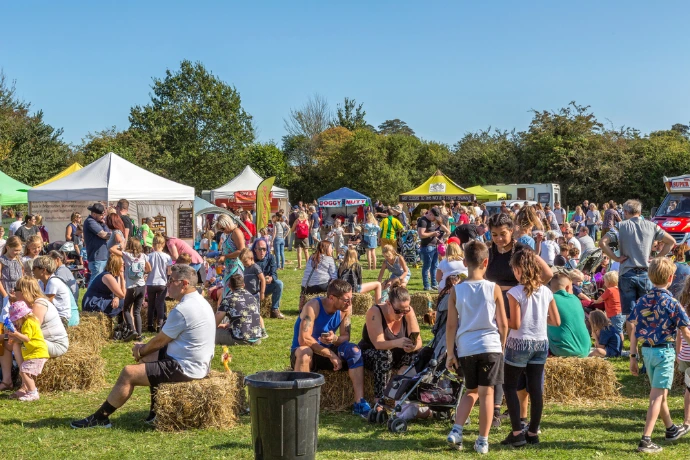
Set up a drop-in session at a local library, or arrange informal meetings at a pub, cafe or local coffee shop. Do you have a local country fair or big event that you could attend, and ask people what they think about the plans? Get people out there with mobile phones to ask the public what they think, video people if they're happy to do so (try to get their permission in writing), or just write down their opinions if they are camera-shy.
Make it easy for people to tell you what they think and encourage them to be honest, not guarded. People will be more likely to talk to you honestly in surroundings they feel comfortable in - you don't have to hold formal meetings in a village hall for them to matter.
Think about how you'll communicate the feedback - obvious choices would be local newspapers and websites but you could also run a short social media campaign with the feedback you've collected to get people interested.
Make it make sense
Explaining complicated subjects in a way that people understand is a skill in itself - you could ask for help from an experienced freelance copywriter or journalist who can take complex data and turn it into an accessible report, plain language summary or web page for you.
Don't think you are limited to written words - have you considered using interactive resources - offer a digital map, for example, that residents can click in different areas to find out what the feedback for that area has been? Why not produce a short video explainer or podcast? Don't be afraid to try new things - there's so much free/inexpensive software available, it's easier than ever to turn dry feedback into an engaging video or a quick animated presentation in Canva. Remember to omit sensitive and private information such as names and contact details.
You could record video clips from locals talking about how the plans will affect them or sharing their ideas (as above, please secure permission in writing before using these).

More creative options do need a little time and skill to master, but it will be worth it for the increase in engagement you are likely to get, compared to a technical PDF published to your website.
As an aside, for accessibility reasons, PDF files aren't ideal because they are static documents which can't be read by screen readers (for people with visual impairment). There's nothing wrong with adding a PDF - but try not to make it the only source of information.
Get creative with AI
AI is another free and easy-to-use tool. When used well, it can help you to get your feedback across in a way that's appealing to more people across a diversity of backgrounds.
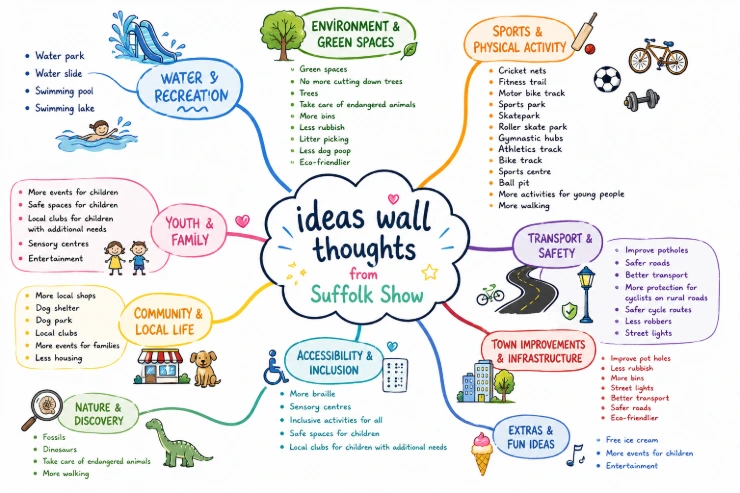
You could use the free version of ChatGPT - or any other AI - to create a visual representation of the feedback. For instance, you can create an 'ideas wall' mapped to different subject areas like leisure/community/environment and add people's comments along with illustrations. Like the below example which was created by SALC after gathering people’s ideas at the Suffolk Show in 2026.
Other AI platforms like Gemini Notebook let you create visuals, infographics and slide decks with the information you feed in. Art can be a powerful tool for engagement, and AI can be a great way for people to channel their creative ideas using images as well as words.
It takes minutes and is worth trying just to see what it comes up with (but do remember to check anything created in AI for accuracy and omit any private/ sensitive information).
Tell a story
Rather than just copy and paste direct feedback from emails or documents, why not use it to tell a story that shows the strength of feeling or explains what the concerns are for locals?
You could use the template SALC has co-created for community responses to categorise headings into subject areas: highways, noise, flooding, landscaping. Then you could add people's personal stories to each category to help add detail to technical information or statistics. As mentioned, it’s critical to secure written permission before doing this.
Explaining why a proposed development will cause problems and illustrating it with examples of traffic holdups, floods or other concerns helps to make the feedback personal and meaningful. You could also ask residents to give video comments and link to or embed these into a webpage.
Paint a picture
Software is available for parish councils that includes interactive digital mapping tools which translate dense technical data into something more interesting.
Many parish councils are using tools like Parish Online to help them streamline the process and help with decoding some of the technical details and making them into usable evidence - with options to overlay Ordnance Survey maps, Land Registry boundaries, and green spaces to create visual representations of an area, along with feedback.
You can use this type of software to help you plot community feedback onto maps and show where the pain points are for traffic, noise, or other concerns.
For more ideas, get in touch with the team at SALC, or you can check out some more creative ideas in the GOV.UK 'Digital Community Engagement Toolkit'